
Water Gel Membrane Testing – Performance Evaluation of Hydrogel Layers for Wound Dressings, Agricultural Mulches and Environmental Barriers
As an ISO/IEC 17025 accredited (CNAS) independent laboratory, we provide specialized testing services for water gel membranes (hydrogel films) used in medical wound care, agricultural moisture retention, controlled release systems, and environmental sealing applications in Austria. Water gel membranes are crosslinked hydrophilic polymer networks that absorb significant amounts of water without dissolving. Their performance depends on water absorption capacity, swelling kinetics, mechanical strength in wet state, permeability to water vapor and gases, biocompatibility, and resistance to microbial degradation. Our laboratory evaluates key parameters: swelling ratio (%), water absorption rate (g/g/min), gel fraction (%), tensile strength of hydrated membrane, water vapor transmission rate (WVTR), and resistance to saline and simulated body fluids. We follow internationally recognized test methods adapted from ASTM F2907, ISO 10993 (biocompatibility), and relevant pharmacopoeia. Results help manufacturers optimize formulation (degree of crosslinking, polymer type), quality control of production batches, and regulatory submission for medical devices or agricultural products.
Types of Water Gel Membrane Samples We Test
- Polyvinyl alcohol (PVA) based hydrogel membranes
- Polyacrylamide (PAAm) and polyacrylate hydrogels
- Natural polymer hydrogels (alginate, chitosan, gelatin, cellulose derivatives)
- Composite hydrogels with reinforcing fibers or nanoparticles
- Medical wound dressing membranes (sterile or non‑sterile)
- Agricultural water‑retention membranes for soil mulching
- Controlled release membranes for fertilizers or pesticides
- Environmental barrier gels for dust suppression or leak sealing
- Laboratory‑cast prototype membranes (for R&D formulations)
- Production samples from continuous casting processes
Key Parameters and Performance Indicators
- Swelling ratio (water absorption capacity) – Maximum amount of water (or saline) absorbed per gram of dry membrane, expressed as g/g or %.
- Swelling kinetics (absorption rate) – Time‑dependent water uptake; determines how quickly the membrane reaches equilibrium swelling.
- Gel fraction (insoluble content) – Proportion of polymer that is crosslinked (not extractable). Indicates degree of crosslinking and structural integrity.
- Hydrated tensile strength and elongation – Mechanical strength of the membrane in its swollen state; important for handling and durability.
- Water vapor transmission rate (WVTR) – Rate at which water evaporates through the membrane; critical for wound dressings to maintain moist environment.
- Ionic sensitivity (swelling in saline or simulated body fluids) – Swelling reduction in physiological saline indicates responsiveness to environment.
- Residual monomers or extractables – Potential irritants or toxic compounds (e.g., residual acrylamide, unreacted crosslinkers).
- Microbial resistance (preservation efficacy) – Ability to resist bacterial or fungal growth during storage or use.
- Biocompatibility (cytotoxicity, skin irritation) – Required for medical applications (ISO 10993).
- Thermal stability (DSC/TGA) – Degradation temperature and glass transition temperature of the dried or hydrated membrane.
Test Methods – Detailed Description
1. Swelling Ratio and Kinetics
A pre‑weighed dry membrane sample (1–2 cm square) is immersed in deionized water (or saline solution, phosphate‑buffered saline) at 37°C ± 1°C. At specific time intervals (e.g., 1 min, 5 min, 10 min, 30 min, 1 h, 2 h, 4 h, 24 h), the sample is removed, surface water blotted, and weighed. The swelling ratio Q = (Wwet – Wdry) / Wdry (g/g). Equilibrium swelling is recorded, and swelling rate constant is calculated by fitting to kinetic models. For medical dressings, swelling in saline is measured.
2. Gel Fraction (Extractable Content)
A dry membrane sample is weighed (Wdry), then immersed in deionized water at 37°C for 24 hours. The swollen membrane is removed, dried in an oven at 70°C to constant weight (Winsoluble). Gel fraction (%) = Winsoluble / Wdry × 100%. A high gel fraction (> 80%) indicates good crosslinking.
3. Mechanical Properties of Hydrated Membrane (Tensile Test)
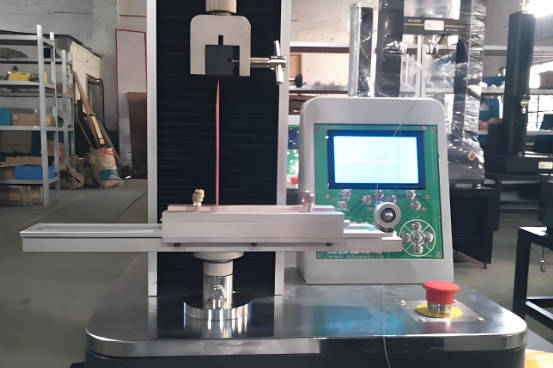
A fully hydrated membrane is cut into dumbbell‑shaped specimens (ISO 37 type 2 or similar). The specimen is mounted in a universal testing machine with pneumatic grips, and pulled at a constant speed (10–50 mm/min) while the membrane remains moist (sprayed with water). Tensile strength (MPa) and elongation at break (%) are recorded. Typical values for PVA hydrogels: tensile strength 0.5–2 MPa, elongation 100–300%.
4. Water Vapor Transmission Rate (WVTR)
A cup method (inverted or upright) is used. The membrane is sealed over a cup containing deionized water (or calcium chloride for dry side). The assembly is placed in a controlled environment (23°C, 50% RH or 37°C, 20% RH for wound dressing standards). Weight loss (or gain) is measured over 24–72 hours. WVTR is expressed in g/m²/day. For wound dressings, a moderate WVTR (200–2000 g/m²/day) is often desired.
5. Residual Monomers and Extractables (HPLC, GC‑MS)
A known area of membrane is extracted in deionized water at 37°C for 24 hours. The extract is analyzed by high‑performance liquid chromatography (HPLC) or gas chromatography‑mass spectrometry (GC‑MS) for residual monomers (e.g., acrylamide, acrylic acid) and crosslinkers (e.g., N,N'‑methylenebisacrylamide). Extractable content should be below regulatory limits (e.g., < 0.5 ppm for medical devices).
6. Biocompatibility Screening (Cytotoxicity)
According to ISO 10993‑5, an extract of the membrane is prepared in cell culture medium. The extract is applied to L929 mouse fibroblast cells. After 24–48 hours, cell viability is assessed by MTT assay. A viability > 70% indicates non‑cytotoxic material (pass).
7. Antimicrobial Resistance (Preservative Efficacy Test)
The membrane is inoculated with a suspension of Staphylococcus aureus, Pseudomonas aeruginosa, Candida albicans, and Aspergillus brasiliensis. After specified incubation periods (7, 14, 28 days), surviving microorganisms are counted. Acceptance criteria depend on product classification (e.g., wound dressing requiring preservation).
8. Differential Scanning Calorimetry (DSC) for Thermal Analysis
A small sample (5–10 mg) of dried or hydrated membrane is sealed in a DSC pan. The temperature is ramped from -30°C to 250°C at 10°C/min under nitrogen. The glass transition temperature (Tg) of the dry polymer, melting point (Tm), and bound/free water transitions are recorded.
9. Ionic Sensitivity and Swelling in Simulated Fluids
Swelling ratio is measured as in method 1, but using 0.9% NaCl solution (saline) or simulated wound fluid (SWF – e.g., 142 mM NaCl, 2.5 mM CaCl₂, buffered to pH 7.4). The ratio of swelling in water to swelling in saline indicates sensitivity to ionic environment.
Sample Preparation and Conditioning
- Membranes are conditioned at 23°C ± 2°C and 50% ± 10% RH for 24 hours before dry‑state tests.
- For hydrated tests, samples are equilibrated in the test fluid (water, saline, PBS) at 37°C for 24 hours (unless kinetics are being measured).
- All tests are performed on at least 5 replicate specimens.
- For medical applications, samples are sterilized (ethylene oxide or gamma irradiation) before testing if required.
Quality Control and Acceptance Criteria (Typical Benchmarks)
The following are typical values for PVA‑based hydrogels used in wound dressings. Clients must provide their specific specifications.
- Swelling ratio (water, 24h): ≥ 10 g/g (often 15–25 g/g)
- Gel fraction: ≥ 85%
- Hydrated tensile strength: ≥ 0.5 MPa
- WVTR: 500–1500 g/m²/day (for moisture‑retentive dressing)
- Residual acrylamide: < 0.1 ppm (toxic monomer)
- Cytotoxicity: cell viability > 70%
- Swelling reduction in saline: ≤ 30% compared to water (for non‑ionic hydrogels).
Reporting and Deliverables
Each water gel membrane test report includes the following information:
- Sample identification (polymer type, crosslinking agent, formulation code, batch number, sterilization method if applicable)
- Test conditions (temperature, fluid composition, pH, duration)
- Swelling kinetics curve (swelling ratio vs. time) and equilibrium swelling value
- Gel fraction (%) and extractables profile (monomers, crosslinkers)
- Mechanical properties of hydrated membrane (stress‑strain curve, tensile strength, elongation)
- Water vapor transmission rate (g/m²/day) and test conditions
- Cytotoxicity result (cell viability %) and any irritation potential
- Antimicrobial resistance (log reduction of test organisms)
- Thermal analysis data (DSC thermogram, Tg, Tm, water transitions)
- Comparison with client‑supplied specifications (if provided) – pass/fail statement
- Raw data (weight measurements, stress‑strain curves, chromatograms) archived for 10 years
No statement of compliance with any external standard is made unless the client has provided specific acceptance criteria in writing. The report is intended for product development, batch release, and regulatory submission.
Applications in Austrian Industry and Research
- Medical device industry (Vienna, Linz, Graz): Quality control of hydrogel wound dressings for chronic wounds and burns.
- Agricultural technology (Research institutes, Styria): Testing of water‑retention hydrogel mulch films to reduce irrigation frequency.
- Pharmaceutical and cosmetic sectors: Hydrogel patches for transdermal delivery or facial masks – evaluation of swelling and WVTR.
- Environmental engineering: Hydrogel barriers for sealing landfill caps or controlling dust – mechanical and swelling tests.
- Packaging: Edible water‑gel films for moisture control in food packaging – WVTR and mechanical integrity.
Why Choose ZKGX?
- State-of-the-art analytical equipment
- Highly qualified scientific team
- Fast turnaround time
- Competitive pricing