
Comprehensive Mask Positive Pressure Respirator Inspection – Ensuring Safety and Performance for Respiratory Protection Equipment
As an ISO/IEC 17025 accredited (CNAS) independent laboratory, we provide specialized inspection and testing services for positive pressure respirators (full face masks, powered air‑purifying respirators – PAPR, and supplied air respirators) to industrial hygiene departments, emergency response teams, healthcare facilities, manufacturing plants, and safety equipment suppliers in Austria. Positive pressure respirators maintain a slightly higher pressure inside the facepiece than the ambient atmosphere, preventing inward leakage of contaminants. They are critical for workers exposed to hazardous dusts, fumes, gases, biological agents, and oxygen‑deficient atmospheres. Our inspection covers visual integrity of the facepiece and seals, positive pressure holding test, inhalation/exhalation valve function, breathing resistance, airflow rate (for PAPR), battery and blower performance, head harness and strap tension, lens clarity and scratch resistance, and communication diaphragm integrity. We follow internationally recognized test procedures (EN 136, EN 146, EN 12942, EN 14387, NIOSH standards) and adapt to Austrian workplace safety regulations (ArbeitnehmerInnenschutzgesetz, AUVA requirements). Results help employers verify that respirators are safe for use, meet legal compliance, and protect wearers effectively.
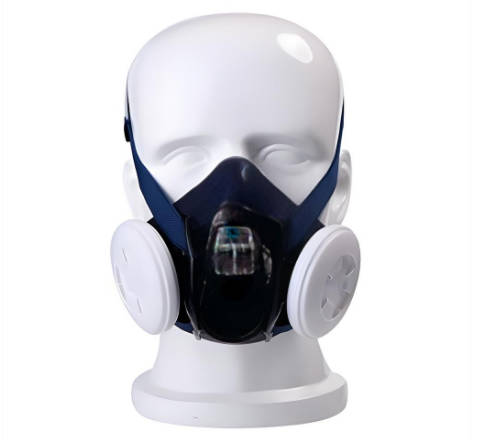
Types of Positive Pressure Respirators We Inspect
- Full face masks with integrated positive pressure (used with PAPR or airline systems).
- Powered air‑purifying respirators (PAPR) – battery‑operated blower units with HEPA or combination filters.
- li>Supplied air respirators (continuous flow or demand‑type) connected to a compressed air source.
- Combination respirators (PAPR + supplied air backup).
- Full face masks from different manufacturers (compatibility testing with filters and blowers).
- Used respirators returned from service (for recertification or failure analysis).
- New respirators before first use (factory acceptance testing).
- Spare parts (face seals, valves, lenses, head harnesses).
Key Inspection Parameters and Defects Detected
- Facepiece seal integrity – Cracks, tears, hardening, or distortion of the elastomeric seal that allows inward leakage.
- Positive pressure holding capability – Ability to maintain a slight overpressure without leakage (tested by blocking the exhalation valve and applying controlled pressure).
- Inhalation and exhalation valve function – Valve sticking, warping, or debris that prevents proper sealing under negative or positive pressure.
- Breathing resistance (inhalation and exhalation) – Excessive resistance increases user fatigue and reduces compliance.
- Lens quality (clarity, scratch resistance, anti‑fog performance) – Impaired vision due to scratches, cracks, or fogging compromises safety.
- Head harness and strap tension (fit and comfort) – Broken, stretched, or incorrectly tensioned straps reduce seal pressure and increase leakage.
- Blower and battery performance (for PAPR units) – Airflow rate below specified minimum, battery runtime insufficient, or alarm system malfunction.
- Filter and canister compatibility and condition – Wrong filter type, damaged sealing gasket, or exhausted particulate/cartridge life.
- Communication diaphragm integrity – Leaks or tears in the speech membrane impair hearing protection and communication.
- Cleaning and disinfection status (for re‑usable respirators) – Residual contamination, degraded elastomers due to harsh chemicals.
Inspection Methods and Testing Procedures
1. Visual and Tactile Inspection (Overall Condition)
Under good lighting (500–1000 lux), we examine the facepiece, head harness, straps, buckles, valves, and lens. We look for cracks, nicks, deformation, discoloration (oxidation or UV damage), and any missing parts. For elastomeric seals, we stretch the material gently to detect hidden cracks or loss of elasticity.
2. Positive Pressure Leak Test (Low Pressure Test)
The respirator is donned (or placed on a test head form). The exhalation valve is blocked manually, and the user (or test system) exhales gently to create a positive pressure inside the mask. If the mask does not hold pressure for at least 10 seconds without audible hissing or measurable pressure drop (using a manometer), the face seal or valve is defective.
3. Negative Pressure Leak Test (Inhalation Check)
With the inhalation valves blocked (or the filters covered), the user inhales gently to create a slight vacuum. If the mask collapses slightly and holds without immediate inward leakage, the seal is acceptable. Rapid collapse or feeling of air rushing in indicates leakage. This test is complementary to the positive pressure test.
4. Quantitative Fit Testing (QNFT) – Using a Controlled Negative Pressure (CNP) or Ambient Aerosol Instrument
We perform quantitative fit testing on a wearer to measure the actual inward leakage of the respirator. A probe is inserted into the mask and connected to an instrument that measures particle concentration (or pressure changes). A fit factor (ratio of ambient concentration to in‑mask concentration) is calculated. For tight‑fitting masks, a minimum fit factor of 100 (half mask) or 200 (full face) is required for most standards.
5. Valve Function Testing (Inhalation and Exhalation)
We manually lift the exhalation valve flap; it should close cleanly without sticking. Using a low‑pressure manometer and a flow source, we measure the pressure drop across the valve at specified flow rates (e.g., 30 L/min). Acceptable limits: exhalation valve opening pressure typically ≤ 10 Pa; inhalation valve leakage ≤ 10 mL/min at a pressure differential of 5 mbar.
6. Breathing Resistance Measurement (for PAPR and airline systems)
The respirator is mounted on a breathing machine (artificial lung) that simulates human breathing at moderate work rates (e.g., 40 L/min, 95 L/min). The pressure drop (inhalation and exhalation) is measured with calibrated pressure transducers. Maximum allowable inhalation resistance for non‑powered respirators is typically ≤ 600 Pa at 95 L/min.
7. Airflow and Battery Performance (PAPR Systems)
A calibrated rotameter or thermal mass flow meter is attached to the breathing hose. With a fully charged battery and a clean filter, the blower is switched on; the airflow rate (L/min) is measured. Minimum required flow is typically 150 L/min for PAPR (varies by standard). We also measure the battery runtime under continuous operation until the low‑battery alarm activates.
8. Lens Inspection (Scratch, Crack, and Fogging)
The lens is examined for deep scratches, cracks, or chemical attack. For anti‑fog performance, we expose the lens to a steam environment for 30 seconds; the fog should clear within 10 seconds. Any permanent fogging or water droplets obstructing vision is a defect.
9. Strap Tension and Head Harness Adjustment
Using a force gauge, we measure the tension in the head straps when the mask is properly donned (typical tension range: 10–20 N for crown straps, 8–15 N for temple straps). Uneven tension or broken ratchets are recorded.
10. Filter/Canister Compatibility and Service Life Indicator Check
We verify that the filter type matches the expected contaminant (particulate, organic vapour, acid gas, etc.). The gasket seal is inspected for damage. For PAPR units, we check the electronic service life indicator (if present) and calibrate it against known filter loading.
11. Cleaning and Disinfection Verification (for reuse)
After cleaning, we perform visual and ATP bioluminescence testing on the facepiece to confirm that protein residues are below acceptable levels (e.g., < 200 RLU).
Quality Control and Acceptance Criteria (Typical Benchmarks)
The following are typical requirements for positive pressure respirators in industrial and healthcare settings. Clients must provide their specific acceptance criteria.
- Positive pressure hold: no pressure drop > 10 Pa over 10 seconds.
- Quantitative fit factor: full face mask ≥ 200 (for half mask ≥ 100).
- Exhalation valve leakage: ≤ 30 mL/min at 20 mbar.
- Inhalation resistance (non‑powered): ≤ 600 Pa at 95 L/min.
- PAPR minimum airflow: ≥ 150 L/min (continuous flow).
- Battery runtime: ≥ 8 hours (full load, new battery).
- Lens fogging: clears within 10 seconds of steam exposure.
- Strap tension: within ±20% of manufacturer specification.
- No cracks, tears, or permanent deformation in any elastomeric component.
Reporting and Deliverables
Each positive pressure respirator inspection report includes the following information:
- Respirator identification (manufacturer, model, serial number, date of manufacture, filter type, battery age).
- Visual inspection findings (photographs of defects, condition ratings).
- Positive/negative pressure test results (pass/fail, measured pressure drop).
- Quantitative fit factor (if performed) and pass/fail according to EN or NIOSH criteria.
- Valve function test results (pressure drop, leakage rate).
- Breathing resistance data (pressure at specified flow rates).
- PAPR airflow (L/min) and battery runtime (hours:minutes).
- Lens and strap assessment (fogging time, tension values).
- Overall conclusion: “Fit for service”, “Needs repair (list components)”, or “Unsafe – discard”.
- Comparison with client‑supplied specifications (if provided) – pass/fail.
- Raw data (test logs, pressure curves, flow readings) archived for 10 years.
No statement of compliance with any external standard or regulation is made unless the client has provided specific acceptance criteria in writing. The report is intended for workplace safety compliance, maintenance planning, and employee health protection.
Applications in Austrian Industry and Public Service
- Fire departments (professional and volunteer brigades): Inspection of positive pressure masks for interior attack and hazardous materials response.
- Chemical and pharmaceutical plants (Linz, Schwechat): Verification of PAPR units for maintenance workers entering confined spaces.
- Healthcare and hospitals (Vienna, Graz, Innsbruck): Testing of N95/PAPR systems for infectious disease wards and COVID‑19 response.
- Mining and tunnelling (Alpine construction, salt mines): Positive pressure airline respirators for dust and gas protection.
- Construction and civil engineering: Respiratory protection for workers exposed to silica dust, welding fumes, and solvent vapours.
Why Choose ZKGX?
- State-of-the-art analytical equipment
- Highly qualified scientific team
- Fast turnaround time
- Competitive pricing