
Clay Evaluation Testing – Comprehensive Physical, Chemical and Mineralogical Characterization of Clays for Ceramics, Construction and Geotechnical Applications
As an ISO/IEC 17025 accredited (CNAS) independent laboratory, we provide specialized clay evaluation testing services to brick and tile manufacturers, ceramic producers, pottery workshops, civil engineering companies, and raw material suppliers in Austria. Clays are fine‑grained natural materials composed primarily of phyllosilicate minerals (kaolinite, illite, smectite, chlorite) together with variable amounts of quartz, feldspar, carbonates, and iron oxides. The performance of clay in brickmaking, ceramic forming, drilling muds, landfill liners, and slope stabilization depends on its particle size distribution, plasticity, shrinkage, drying sensitivity, firing behavior, and mechanical strength. Our laboratory performs a full suite of tests: Atterberg limits (liquid limit, plastic limit, plasticity index), particle size distribution (sieve and hydrometer), linear drying and firing shrinkage, water absorption, modulus of rupture (green and fired), firing color, loss on ignition, cation exchange capacity (CEC), mineralogical analysis (XRD), and chemical composition (XRF). We follow international standards (ISO, ASTM, DIN, ÖNORM) and adapt to the specific requirements of the Austrian ceramics and construction industries. Results help manufacturers optimize clay blends, predict drying and firing behaviour, assess suitability for extruded or pressed products, and certify raw materials for building applications.
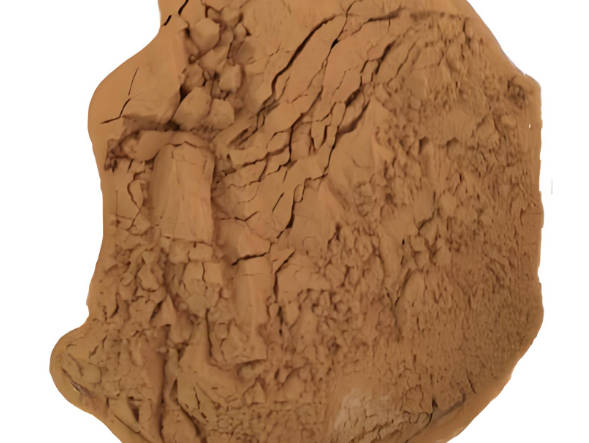
Types of Clay Samples We Test
- Raw clay from quarries (natural clays, kaolin, ball clay, fireclay, bentonite).
- Clay blends (for brick, tile, roof tile, heavy clay products).
- Processed clay powders (milled, dried, or slurried).
- Extruded or pressed test specimens prepared in our laboratory (for firing trials).
- Field samples from clay deposits (geotechnical investigations).
- Clays intended for ceramic tableware, sanitary ware, or art pottery.
- Clay materials for drilling fluids (bentonite).
- Competitor or reference clays (benchmarking).
Key Quality Parameters and Test Methods
1. Particle Size Distribution (Sedimentation and Sieving)
Clay is dispersed in water (with sodium hexametaphosphate as dispersant) and passed through a 63 µm sieve. The fraction < 63 µm is analysed by the hydrometer method (sedimentation rate according to Stokes’ law). The proportion of clay fraction (< 2 µm) and silt fraction (2–63 µm) is calculated. For coarse material, dry sieving is performed. Typical brick clays: 20–40% clay fraction, 30–50% silt, 10–30% sand.
2. Atterberg Limits (Liquid Limit – LL, Plastic Limit – PL, Plasticity Index – PI)
Used to classify clay plasticity and workability. The liquid limit is determined with a Casagrande cup or fall cone penetrometer. The plastic limit is the water content at which a 3 mm diameter thread crumbles. The plasticity index PI = LL – PL. Brick clays typically have PI 15–25; highly plastic clays (PI > 35) require tempering with sand or grog.
3. Linear Drying Shrinkage and Firing Shrinkage
A wet test bar (typically 200×40×40 mm) is extruded or pressed, its length measured. After drying at 110°C to constant weight, the dry length is measured – drying shrinkage = (Lwet – Ldry) / Lwet × 100%. The dried bar is then fired to the specified temperature (e.g., 950°C, 1050°C, 1150°C) and the fired length is measured – firing shrinkage = (Ldry – Lfired) / Ldry × 100%. Total shrinkage = drying + firing. Acceptable range for bricks: drying shrinkage ≤ 8%, firing shrinkage ≤ 5%.
4. Water Absorption (Fired Ceramics)
After firing, the test piece is dried, weighed, boiled in water for 2 hours, cooled, and weighed immersed and saturated. Water absorption = (saturated weight – dry weight) / dry weight × 100%. For heavy clay products (bricks, pavers), water absorption should be 6–18%. For low‑absorption products (stoneware, clinker), it should be < 3%.
5. Modulus of Rupture (Green, Dry, and Fired Strength)
Test bars are broken in three‑point bending using a universal testing machine. Green strength (after extrusion) indicates handling strength; dry strength (after drying) is critical for stacking and kiln loading; fired strength (after firing) gives the final product strength. Typical fired MOR for facing bricks: 10–25 MPa.
6. Loss on Ignition (LOI) – Organic and Carbonate Content
Crushed clay is heated at 1000°C for 1 hour. LOI represents the weight loss due to water of crystallization, decomposition of carbonates, and organic matter. High LOI (> 10%) may cause bloating or high firing shrinkage.
7. Cation Exchange Capacity (CEC) and Swelling Potential
For montmorillonite‑rich clays (bentonites), CEC is determined by ammonium acetate exchange (meg/100 g). High CEC (> 60 meg/100 g) indicates high swelling potential. This is essential for drilling muds, geosynthetic clay liners, and sealing applications.
8. Mineralogical Analysis (X‑Ray Diffraction – XRD)
Powdered clay is analysed to identify clay minerals (kaolinite, illite, smectite), non‑clay minerals (quartz, calcite, dolomite, feldspar, hematite, pyrite). Semi‑quantitative percentages are reported. This helps predict firing behaviour, colour development, and frost resistance.
9. Chemical Analysis (X‑Ray Fluorescence – XRF)
Major oxides (SiO₂, Al₂O₃, Fe₂O₃, CaO, MgO, K₂O, Na₂O, TiO₂, P₂O₅) are quantified. Sintering behaviour, fluxing effects, and colour (iron, titanium) are correlated with composition. For example, high CaO (lime) may cause lime bloat; high Fe₂O₃ gives red/brown colour; high K₂O/Na₂O lowers the vitrification temperature.
10. Shrinkage and Cracking Sensitivity (Bigot Curve)
A Bigot curve plots shrinkage vs. water content during drying. The slope indicates drying sensitivity. A high slope (rapid loss of water with large shrinkage) indicates risk of cracking. We advise maximum drying rate to avoid defects.
11. Frost Resistance (Freeze‑Thaw Test)
Fired clay products (bricks, tiles) are saturated with water and subjected to 50–150 freeze‑thaw cycles (‑15°C to +20°C). Mass loss and strength reduction are measured. Acceptable: mass loss < 0.5% per cycle, no cracks.
12. Efflorescence Test
Fired test pieces are placed in water or in a humidity cabinet for 14 days. The appearance of white salt deposits (calcium, magnesium, sodium salts) is rated qualitatively (none, slight, moderate, severe). Efflorescence is unsightly and can indicate soluble salts in the raw clay or in the firing atmosphere.
Quality Control and Interpretation of Results
All tests are performed on representative samples (minimum 3 specimens per test). We report mean values, standard deviations, and coefficients of variation. For brickmaking, typical target ranges (reference only, client must provide specifications):
- Plasticity index: 15–25 (extruded bricks), 25–35 (pressed tiles).
- Drying shrinkage: ≤ 8%.
- Firing shrinkage: ≤ 5% (for dimensional stability).
- Water absorption: 10–18% (facing bricks), 6–12% (pavers).
- Modulus of rupture (fired): ≥ 10 MPa (facing bricks), ≥ 25 MPa (clinker).
- Frost resistance: mass loss < 1% after 100 cycles.
- Efflorescence: none or slight.
Reporting and Deliverables
Each clay evaluation test report includes the following information:
- Sample identification (origin, type, colour, moisture content as received).
- Particle size distribution (clay, silt, sand fractions) and Atterberg limits (LL, PL, PI).
- Drying and firing shrinkage (total, drying, firing) and firing colour description.
- Water absorption (%) and modulus of rupture (green, dry, fired).
- Loss on ignition (%), chemical composition (major oxides).
- Mineralogical composition (XRD, semi‑quantitative).
- Frost resistance (mass loss after specified cycles).
- Efflorescence rating.
- Interpretation (e.g., “clay suitable for extruded brick, but temper with 10% sand to reduce drying sensitivity”).
- Comparison with client‑supplied specification – pass/fail for each parameter.
- Raw data (XRD patterns, XRF spectra, particle size curves) archived for 10 years.
No statement of compliance with any external standard is made unless the client has provided specific acceptance criteria in writing. The report is intended for raw material evaluation, product development, and production quality control.
Applications in the Austrian Clay and Ceramic Industry
- Brick and tile manufacturing (Upper Austria, Lower Austria, Styria): Quality control of raw clays and optimisation of clay blends for lightweight and facing bricks.
- Ceramic tableware and sanitary ware (Tyrol, Carinthia): Evaluation of kaolin and ball clay for plasticity, firing shrinkage, and whiteness.
- Roof tile production: Testing of clays for low water absorption and frost resistance.
- Geotechnical engineering (landslide remediation, dam cores): Classification of clays for impermeable barriers and shear strength.
- Drilling fluids (oil and gas exploration): CEC and swelling tests for bentonite used in drilling muds.
Why Choose ZKGX?
- State-of-the-art analytical equipment
- Highly qualified scientific team
- Fast turnaround time
- Competitive pricing