
Test Results of Ash Rock Characteristics – Geotechnical and Physical‑Mechanical Evaluation of Volcanic Tuff for Construction and Infrastructure in Austria
As an ISO/IEC 17025 accredited (CNAS) independent laboratory, we provide specialized testing and characterization services for ash rock (volcanic tuff, volcanic ash rock) to civil engineering contractors, geological institutes, mining companies and infrastructure planners in Austria. Ash rock, formed from compacted volcanic ash and debris (tuff), is a porous, lightweight natural stone used in road construction, fill material, slope stabilization, tunnel backfill, and as a raw material for lightweight aggregates. Its variable physical and mechanical properties – porosity, density, water absorption, unconfined compressive strength, point load strength, slake durability, and chemical composition – must be thoroughly characterized to ensure safe and economical use in construction projects, especially in alpine regions where tuff formations are encountered in tunneling and foundation works. Our laboratory performs a comprehensive suite of tests on block samples, drill cores, and crushed material: density (dry, saturated, and apparent), water absorption (%), open porosity (%), uniaxial compressive strength (UCS), point load strength index (Is(50)), slake durability index (Id), Los Angeles abrasion (for aggregate), and chemical analysis (major oxides). We follow recognized international standards (ISO, ASTM, EN, ÖNORM) and adapt to Austrian geotechnical practice. Results help engineers classify ash rock strength, predict weathering behavior, design stable slopes, and select appropriate support measures for tunnels in tuff formations.
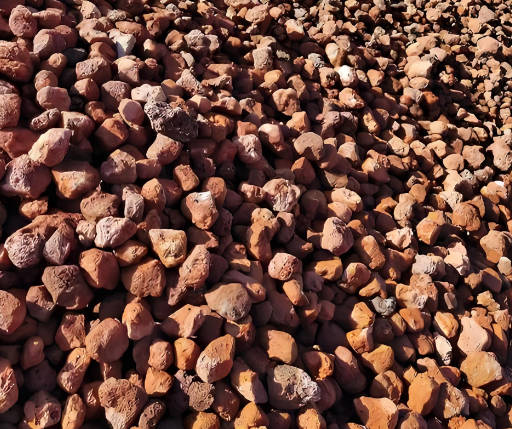
Types of Ash Rock Samples We Test
- Block samples from quarries or excavation sites (for preparing test specimens)
- Drill cores (NX, HQ, PQ diameters) from geotechnical investigations
- Crushed ash rock aggregates (for road base, subbase, filter layers)
- Weathered and fresh ash rock (comparison of degradation)
- Specimens from tunnel muck (spoil material) for reuse assessment
- Samples from different lithological facies (lapilli tuff, fine‑grained tuff, welded tuff)
- Disturbed and undisturbed samples for laboratory testing
Key Parameters and Test Methods
1. Density and Water Absorption (EN 1936 / ÖNORM B 3120)
We determine dry density (ρdry), saturated density (ρsat), apparent density (ρapp), and open porosity (no) using the buoyancy (Archimedes) method. Specimens are oven‑dried at 105°C to constant weight, then vacuum‑saturated in water. For ash rock with very high porosity (> 15%), we use a coating method to avoid water absorption from edges. Typical ash rock (tuff) has dry density 1.4–2.2 g/cm³, open porosity 15–35%, water absorption 5–15%.
2. Unconfined Compressive Strength (UCS) – EN 1926 / ASTM D7012
Right cylinders (diameter = 2× height, typically 50 mm or 70 mm) are cut from drill core or block, ends ground flat and parallel. The specimen is compressed axially at a constant stress rate (0.5–1.0 MPa/s) until failure. The peak load is divided by cross‑sectional area to give UCS (MPa). For ash rock, UCS can range from 2 MPa (very weak tuff) to 30 MPa (strong welded tuff). We also record failure mode (splitting, shear, or multiple fractures).
3. Point Load Strength Index (Is(50)) – EN 1926 / ISRM
Irregular lumps, block pieces, or core segments are placed between conical platens. The load at failure is recorded, and the point load strength is normalized to a 50 mm diameter index (Is(50)). This index correlates with UCS (UCS ≈ 14–22 × Is(50) for tuff, depending on porosity). The test is rapid and requires minimal specimen preparation, making it ideal for field‑ or lab‑screening of ash rock quality.
4. Slake Durability Index (Id) – ASTM D4644 / ÖNORM B 3132
This test measures the resistance of ash rock fragments to disintegration when subjected to repeated wetting and drying cycles. Ten oven‑dried rock lumps (each 40–60 g) are placed in a rotating drum partially submerged in water. After 20 minutes of rotation, the retained mass is dried and weighed. Two cycles are performed. The slake durability index Id₂ (after second cycle) is calculated as (final dry mass / initial dry mass) × 100%. Low durability (Id₂ < 50%) indicates material that rapidly degrades in wet conditions, unsuitable for permanent fill or slopes.
5. Los Angeles Abrasion (for ash rock aggregates) – EN 1097‑2
For crushed ash rock intended for road construction, we perform the Los Angeles abrasion test. A specified mass of aggregate is placed in a rotating drum with steel balls. After 500–1000 revolutions, the material is sieved, and the abrasion loss (%) is calculated. For base course applications, LA loss should typically be < 35% (stronger aggregates) or < 45% for weaker materials. Ash rock often yields 30–50% loss.
6. Particle Size Distribution (Sieve Analysis) – EN 933‑1
For crushed ash rock and tunnel spoil, we determine the grain size curve by dry sieving (for coarse material) and, if required, hydrometer for fines (< 0.063 mm). This is essential for classifying the material as fill or aggregate.
7. Chemical Analysis (Major Oxides) – XRF or ICP‑OES
We analyze representative powdered ash rock samples for SiO₂, Al₂O₃, Fe₂O₃, CaO, MgO, Na₂O, K₂O, TiO₂, P₂O₅, and loss on ignition (LOI). Volcanic tuffs are typically rhyolitic to andesitic in composition (SiO₂ 60–75%). This data helps predict reactivity with cement (alkali‑silica reaction potential) and weathering susceptibility.
8. Direct Shear Strength (on discontinuities or intact rock) – ASTM D5607 / EN 1536
For larger blocks, we perform direct shear tests on natural fractures or bedding planes to obtain cohesion (c) and friction angle (φ). This is critical for slope stability analysis in tuff formations.
9. Swelling Pressure (for clay‑rich ash rock) – ÖNORM B 4430
Some altered tuffs contain smectite or other swelling clays. We measure the swelling pressure under confined conditions (odometer test) to assess risk of heave when water is added.
Test Results – Typical Ranges for Ash Rock (Volcanic Tuff)
The following are typical values observed for different grades of ash rock. Clients must compare against project‑specific specifications.
- Dry density: 1.4 – 2.2 g/cm³ (lower for pumiceous tuff, higher for welded tuff)
- Open porosity: 15 – 35% (non‑welded tuff); 5 – 15% (densely welded)
- Water absorption: 5 – 15% (by weight)
- UCS (unconfined compressive strength): 2 – 30 MPa
- Point load strength Is(50): 0.2 – 2.5 MPa
- Slake durability index Id₂: 40 – 95% (weathered tuff < 60%)
- Los Angeles abrasion loss (for aggregate): 30 – 50%
- Internal friction angle (φ′): 30 – 40° (for sound tuff)
- Cohesion (c′): 0.1 – 1.0 MPa
Quality Control and Interpretation
- Each test is performed on a minimum of 5 specimens (for compressive strength and point load) or 2 specimens for slake durability.
- We report mean values, standard deviation, and coefficient of variation. High variation (> 20%) indicates heterogeneous ash rock requiring more samples.
- Acceptance criteria must be provided by the client (e.g., “UCS > 5 MPa for foundation rock”, “Id₂ > 70% for fill material”).
Reporting and Deliverables
Each ash rock test report includes the following information:
- Sample identification (quarry or borehole, depth, lithology, sample type – block, core, crushed)
- Physical properties: dry density (g/cm³), saturated density, open porosity (%), water absorption (%)
- Mechanical properties: UCS (MPa), Is(50) (MPa), slake durability Id₂ (%), Los Angeles abrasion loss (%) (for aggregate), shear strength parameters (c, φ) if measured
- Chemical analysis (major oxides as weight %)
- Particle size distribution (if applicable)
- Swelling pressure and classification (if measured)
- Geotechnical classification and interpretation (e.g., “very weak, highly porous, low durability – unsuitable for permanent cut slope without protection”)
- Comparison with client‑supplied specifications (if provided) – pass/fail statement for each parameter
- Raw data (load‑deformation curves, slake durability drum details, XRF spectra) archived for 10 years
No statement of compliance with any external standard is made unless the client has provided specific acceptance criteria in writing. The report is intended for geotechnical design, material sourcing, and construction quality assurance.
Applications in Austrian Infrastructure and Construction
- Tunnel construction (e.g., Semmering Base Tunnel, Brenner Base Tunnel – Alpine crossings through volcanic formations): Characterization of tuff for tunnel support and muck reuse.
- Road construction (motorways A9, A10, S6): Use of crushed ash rock as base course; testing for abrasion and frost resistance.
- Slope stabilization (Styria, Lower Austria, Tyrol): Assessment of weathered ash rock for landslide hazard analysis.
- Landfill engineering: Evaluation of ash rock as drainage layer material (permeability, particle size).
- Historic building restoration: Characterization of tuff as a natural building stone for repair projects.
Why Choose ZKGX?
- State-of-the-art analytical equipment
- Highly qualified scientific team
- Fast turnaround time
- Competitive pricing