
Internal Pipe Coating Services – Protecting Pipelines Against Corrosion, Abrasion and Chemical Attack for the Austrian Oil, Gas and Water Industries
As an ISO/IEC 17025 accredited (CNAS) independent laboratory, we provide specialized inspection and quality assurance services for internal pipe coating applications to pipeline operators, coating applicators, engineering contractors, and infrastructure companies in Austria. Internal pipe coating is the application of a protective layer to the inner surface of steel pipes, serving as a critical barrier against corrosion from transported fluids, chemical attack, abrasive wear, and flow friction. These coatings are essential for extending pipeline service life, maintaining hydraulic efficiency, and preventing costly failures in oil and gas transmission, district heating, water supply, and industrial process piping. Our laboratory evaluates coating quality through non‑destructive testing (holiday detection, dry film thickness measurement, adhesion testing) and, where required, destructive analysis of coating coupons. We follow international standards (ISO 21809, ÖNORM EN ISO standards, NACE SP0188, ASTM D7091) and adapt to Austrian quality requirements. Our services support manufacturers in process validation, applicators in quality control, and asset owners in life‑cycle management of their pipeline infrastructure.
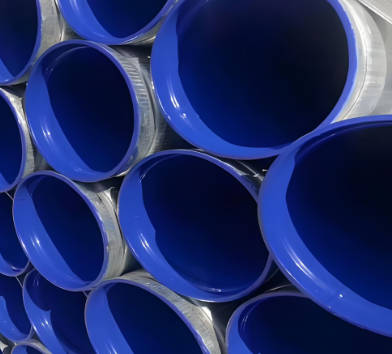
Types of Internal Pipe Coatings We Assess
- Fusion bonded epoxy (FBE) coatings – single‑layer and dual‑layer (FBE is the most widely used internal coating for oil, gas and water pipelines due to its excellent adhesion, chemical resistance and ability to reduce flow drag)[reference:0].
- Liquid epoxy coatings – applied by spray or centrifugal methods for pipelines and fittings, offering corrosion protection for produced water and chemical lines[reference:1].
- Polyurethane (PU) coatings – providing high abrasion resistance for slurry pipelines and mechanical protection[reference:2].
- Cement mortar lining – a cost‑effective, alkalinity‑providing lining for potable water, wastewater and cooling water systems (typical thickness 3–25 mm)[reference:3][reference:4].
- Rubber lining – natural rubber, neoprene or butyl (3–12 mm) for abrasive slurries and acidic media (HCl, H₂SO₄)[reference:5][reference:6].
- Polyethylene (PE) and polypropylene (PP) linings – for water, mild chemicals, and acid/brine service[reference:7].
- PTFE (Teflon) lining – for highly aggressive chemicals, pharmaceutical applications and high‑temperature service (–200°C to 260°C)[reference:8].
- Glass‑reinforced epoxy/polyester (GRE/GRP) linings – for seawater and produced water handling[reference:9].
- Corrosion‑resistant alloy (CRA) cladding – metallurgically bonded overlay of stainless steel, Inconel or nickel alloys for extreme corrosion and high‑temperature service[reference:10].
Key Coating Quality Parameters and Defects We Detect
- Holidays (pinholes, voids, cracks, thin spots) – Discontinuities in the coating that expose the steel substrate to corrosive fluids, identified through high‑voltage spark testing or low‑voltage wet sponge testing[reference:11].
- Dry film thickness (DFT) variation – Uneven thickness leading to inadequate protection at thin areas or cracking/sagging at overly thick areas; measured with magnetic induction or eddy current gauges[reference:12].
- Poor adhesion to the steel substrate – Coating detachment from the pipe wall under operational stress, assessed by pull‑off adhesion testing (tensile bond strength measurement)[reference:13].
- Inadequate surface preparation (blast profile, cleanliness) – Residual mill scale, rust or insufficient anchor pattern prevents proper coating bonding; verified by surface profile gauges and reference comparators[reference:14].
- Porosity and internal voids – Microscopic voids within the coating layer that reduce barrier effectiveness and promote under‑film corrosion.
- Cracking, blistering or delamination – Resulting from improper curing, thermal stress or contamination between layers.
- Contamination (oil, grease, dust) beneath coating – Compromises long‑term adhesion and can initiate corrosion from within.
Inspection and Testing Methods We Perform
1. Coating Thickness Measurement (Dry Film Thickness – DFT)
Using calibrated magnetic induction gauges (for steel substrates) or eddy current gauges (for non‑ferrous substrates), we measure dry film thickness at multiple points across the coated pipe surface. Measurements are compared against project specifications (e.g., 300–500 µm for FBE internal coatings). We report average thickness, minimum, maximum, standard deviation and the percentage of readings within tolerance[reference:15].
2. Holiday Detection (Porosity and Pinhole Testing)
We perform high‑voltage spark testing (for coatings > 500 µm thickness) or low‑voltage wet sponge testing (for thinner films) over the entire coated surface to locate pinholes, cracks and other discontinuities that breach the insulating barrier[reference:16][reference:17]. The test voltage is set according to the specified thickness and the applicable standard. All detected holidays are marked and recorded; repairs are verified by retesting.
3. Pull‑off Adhesion Testing (Tensile Bond Strength)
A dolly is glued to the coated surface; after curing, a calibrated adhesion tester applies tensile force perpendicular to the coating until detachment occurs. The failure force is recorded in MPa (or psi). The failure mode is also classified (e.g., cohesive failure within coating, adhesive failure at the steel interface, or substrate failure). This test is typically performed on witness coupons or on the pipe itself where permissible[reference:18].
4. Visual Inspection and Surface Condition Assessment
Following international practice, we conduct a systematic visual inspection of the entire coated internal surface under appropriate lighting to identify obvious defects such as blisters, runs, sags, inclusions, and contamination[reference:19]. Surface preparation quality prior to coating is also verified against cleanliness standards and anchor pattern profiles.
5. Cross‑Sectional Microscopy (for detailed layer analysis)
A sample of the coated pipe is cut, mounted in resin, polished, and examined under an optical microscope (50× to 500×). We measure individual layer thickness (for multi‑layer systems), detect voids, porosity, and inclusions, and assess the coating/substrate interface quality[reference:20].
6. Environmental Simulation and Chemical Resistance Testing
When specified, we expose coated test panels or pipe sections to accelerated aging conditions: salt spray (NSS), elevated temperature immersion in process fluids (water, oil, chemicals), and UV exposure to predict long‑term performance under operational environments[reference:21]. Weight change, blistering, adhesion retention and visual appearance are recorded.
Applicable Standards and Quality Compliance
Our internal pipe coating inspection services align with internationally recognized standards and Austrian national implementations. These include ÖNORM EN ISO 21809 (Petroleum and natural gas industries – External and internal coatings for pipelines)[reference:22][reference:23], NACE SP0188 for holiday detection[reference:24], NACE SP0286 for surface preparation, ASTM D7091 for dry film thickness measurement, and ASTM D4541 / ISO 4624 for pull‑off adhesion testing[reference:25]. For potable water applications, we follow relevant DVGW and ÖNORM drinking water regulations. We calibrate all measurement instruments at regular intervals, maintain traceability of reference standards, and document all inspection results in accordance with ISO/IEC 17025 requirements. Reports include full traceability of calibration, instrument identification, raw measurement data, and a clear pass/fail conclusion against client‑supplied acceptance criteria.
Reporting and Deliverables
Each internal pipe coating inspection report includes the following information:
- Pipeline identification (diameter, length, material grade, coating type and specification, batch numbers)
- Surface preparation verification (cleanliness grade, anchor profile, environmental conditions during blasting)
- Coating thickness measurement results (average, min, max, standard deviation, % in tolerance)
- Holiday detection results (number of defects, locations, repair status and retest confirmation)
- Adhesion test results (pull‑off strength in MPa, failure mode description, photographic documentation)
- Visual inspection observations (defect description, location, acceptance/rejection)
- Compliance statements relative to the applicable standards (ÖNORM EN ISO 21809, NACE, ASTM, client specification)
- Comparison with client‑supplied acceptance criteria (pass/fail conclusion with supporting evidence)
- Raw data (thickness logs, adhesion force curves, defect maps, calibration records) archived for 10 years
No statement of compliance with any external standard or regulation is made unless the client has provided specific acceptance criteria in writing. The report is intended for pipeline coating quality assurance, project acceptance, and regulatory compliance documentation.
Applications in the Austrian Pipeline Industry
- Oil and gas transmission pipelines (OMV, gas network operators): Internal FBE and epoxy coatings for corrosion protection and drag reduction in high‑pressure gas transmission lines.
- District heating networks (Fernwärme Wien, Linz, Graz): Internal anti‑corrosion coatings for steel pipes in hot water systems, evaluated for long‑term thermal stability.
- Water supply and wastewater infrastructure (municipal utilities, industrial water treatment): Cement mortar lining, epoxy and polyurethane coatings for drinking water compliance and abrasion resistance[reference:26].
- Industrial process piping (chemical plants, refineries, steel works): PTFE and rubber linings for highly corrosive and abrasive service conditions[reference:27].
- Pipeline rehabilitation projects: Inspection of in‑situ applied internal coatings using robotic application systems, ensuring coverage continuity over joints and bends[reference:28].
Why Choose ZKGX?
- State-of-the-art analytical equipment
- Highly qualified scientific team
- Fast turnaround time
- Competitive pricing