
Fire Resistance of Brick Masonry – Performance Evaluation of Clay Brick Walls Under Standard Fire Exposure for Building Safety in Austria
As an ISO/IEC 17025 accredited (CNAS) independent laboratory, we provide specialized fire resistance testing services for brick masonry assemblies to construction companies, brick manufacturers, fire safety engineers, building authorities, and certification bodies in Austria. Brick masonry is one of the most common building materials for load‑bearing and non‑load‑bearing walls in residential, commercial, and industrial construction. Its fire performance – resistance to collapse, flame penetration, and heat transmission – is critical for compartmentation, escape route protection, and structural stability during a fire. Fire resistance is expressed in minutes (e.g., 30, 60, 90, 120, 180 minutes) according to ÖNORM EN 13501‑2 (Euroclass) and Austrian building codes (OIB Guideline 2). Our laboratory conducts fire tests on brick masonry specimens (full‑scale wall panels, columns, or beams) in accordance with EN 1365‑1 (load‑bearing walls) and EN 1364‑1 (non‑load‑bearing walls) using a vertical furnace. We measure three key criteria: load‑bearing capacity (R), integrity (E), and insulation (I). We also evaluate spalling, smoke leakage, and temperature rise on the unexposed face. Results help manufacturers certify their masonry systems, engineers design fire‑safe buildings, and building authorities grant approvals for use in fire compartments and escape routes.
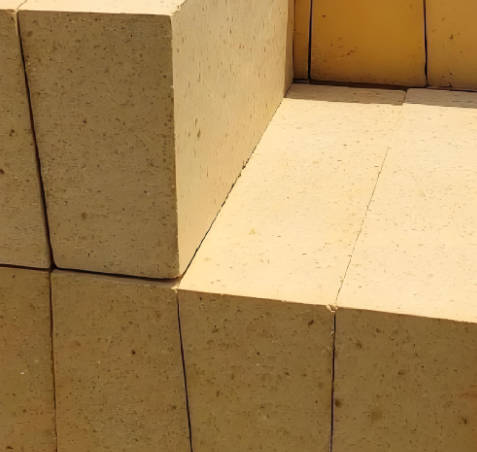
Types of Brick Masonry Specimens We Test
- Solid clay brick walls (single leaf, double leaf, with or without plaster)
- Hollow clay block masonry (vertical or horizontal perforations)
- Reinforced brick masonry (with embedded steel reinforcement)
- Brick walls with fire‑protective coatings (gypsum plaster, vermiculite, intumescent paints)
- Masonry with different mortar types (cement mortar, lime‑cement mortar, thin‑bed mortar)
- Walls with openings (doors, windows, service penetrations) – tested for integrity around penetrations
- Load‑bearing columns and beams (for building frames)
- Specimens from production (for regular certification) or from existing buildings (for retrofitting assessment)
- Competitor masonry systems (comparative benchmarking)
- Small‑scale laboratory specimens (for screening tests) and full‑scale (3 m × 3 m) for certification
Key Fire Resistance Parameters and Failure Criteria (ÖNORM EN 13501‑2)
- Load‑bearing capacity (R) – Ability to sustain mechanical loads during fire exposure. Failure occurs when excessive deformation (deflection rate > L²/6000 mm/min for beams, L/30 for columns) or collapse happens.
- Integrity (E) – Prevention of flame passage or hot gases through cracks, openings, or joints. Failure is recorded when a cotton pad ignites (integrity failure) or when a gap gauge (6 mm or 25 mm) penetrates a crack.
- Insulation (I) – Limitation of temperature rise on the unexposed face. Failure occurs when the average temperature rise exceeds 140°C or any single point exceeds 180°C above initial temperature.
- Spalling – Explosive detachment of brick layers (can reduce wall thickness and accelerate heat transfer). Spalling depth and area are recorded even if R/E/I criteria are still met.
- Smoke leakage – Where required, we measure the volume of smoke passing through the wall (m³/h/m²) under a small pressure difference (e.g., 10 Pa).
Test Equipment and Instrumentation
- Vertical furnace (gas‑fired) – Capable of exposing a wall panel (up to 3 m × 3 m × 0.5 m thickness) to temperatures following the standard time‑temperature curve: T = 20 + 345 log₁₀(8t + 1), reaching about 1000°C after 1 hour. Furnace has thermocouples (plate thermometers) to control heat input.
- Loading frame (for load‑bearing walls) – Hydraulic jacks apply constant vertical load (simulating service load) to the top of the wall during the fire test. Load is maintained throughout the test.
- Thermocouples (unexposed face) – Placed at multiple points (at least 5) on the cool side to measure temperature rise. Type K thermocouples (accuracy ±0.5°C).
- Video and optical inspection – High‑definition cameras record flame penetration and crack development. A cotton pad test is performed every 5 minutes to check integrity failure.
- Deflection measurement – LVDT (linear variable differential transformer) – Measures vertical and horizontal displacements of the wall under load.
- Data acquisition system – Records furnace temperatures, unexposed face temperatures, load, and displacement at 1‑minute intervals.
Specimen Preparation and Conditioning
- Wall panels are constructed by experienced masons according to the client’s specifications (brick type, mortar, joint thickness, plaster, reinforcing details). Minimum size: 2.5 m × 2.5 m (or as required by the standard).
- Specimens are conditioned at ambient temperature (20°C ± 5°C) and 50% ± 10% relative humidity for at least 14 days to allow mortar curing and moisture equalization.
- For load‑bearing walls, the applied load is calculated based on the design load (dead + live load) of the intended application.
- At least 2 identical specimens are tested (or one specimen per configuration plus a repeat if requested).
Test Procedure (Fire Exposure)
- The wall is mounted in the furnace frame, with the exposed side facing the burners. For load‑bearing tests, hydraulic jacks apply the predetermined load and maintain it constant throughout.
- The furnace is ignited, and the temperature follows the standard curve (EN 1363‑1). The test continues until failure of R, E, or I criteria is observed or until the required fire resistance rating (e.g., 90 minutes) is achieved without failure.
- Every 5 minutes, the integrity is checked using a cotton pad (mounted on a handheld rod) pressed against cracks or openings for up to 30 seconds. If the pad ignites, integrity failure is recorded.
- Unexposed face temperatures are recorded continuously. The average temperature is calculated; if the average exceeds 140°C above ambient or any point exceeds 180°C, insulation failure is recorded.
- Load‑bearing capacity is monitored by displacement transducers. For walls, a deflection rate exceeding L²/12000 mm/min after the initial 10 minutes is considered failure (for bending).
- After the test, the specimen is cooled and examined for spalling depth, cracking pattern, and any exposed reinforcement.
Typical Fire Resistance Ratings for Brick Masonry (Reference Values)
The following are indicative values for common brick masonry assemblies tested to EN 1365‑1. Actual ratings depend on brick density, thickness, mortar type, plaster, and load level.
- Solid clay brick wall (240 mm thick, cement mortar, unplastered): REI 180 (load‑bearing, 180 minutes fire resistance).
- Solid clay brick wall (115 mm thick, cement mortar, unplastered): REI 90 – REI 120.
- Hollow clay block masonry (200 mm thick, lightweight aggregate, plastered both sides): REI 90 – REI 120.
- Hollow block masonry (150 mm thick, unplastered): REI 60 – REI 90.
- Reinforced brick masonry column (240×240 mm, unreinforced): R 90 (load‑bearing only).
- Non‑load‑bearing brick partition (100 mm thick, plastered): EI 60 – EI 90.
Quality Control and Interpretation of Results
- Each test provides a fire resistance classification (e.g., REI 90, EI 60, R 120). The result applies only to the exact construction tested (brick type, dimensions, mortar, plaster, loading).
- We report the time (in minutes) at which each criterion (R, E, I) fails or the time at which the test was terminated without failure.
- Acceptance criteria are defined by national building regulations (e.g., Austrian OIB Guideline 2) or the client’s project requirements (e.g., “REI 90 required for compartment walls”).
- If spalling occurs, we note its depth and extent. Severe spalling (≥ 20% of thickness lost) may reduce effective fire resistance even if R/E/I criteria are still met; this is reported as a cautionary note.
Reporting and Deliverables
Each fire resistance test report for brick masonry includes:
- Specimen description (brick type, dimensions, density, mortar composition, plaster thickness, reinforcing details, applied load if load‑bearing)
- Conditioning and curing history
- Furnace temperature curve (comparison with standard curve)
- Time‑temperature graphs for unexposed face (individual thermocouples and average)
- Integrity observations (cotton pad ignition times, gap gauge insertion)
- Deflection/time curves (for load‑bearing walls)
- Post‑test photographs (exposed face, unexposed face, cracks, spalling, reinforcement condition)
- Fire resistance classification (e.g., REI 90, EI 60, R 120) with time of failure for each criterion
- Comparison with client‑supplied specification (pass/fail statement)
- Raw data (thermocouple logs, deflection records, video files) archived for 10 years
No statement of compliance with any external standard or regulation is made unless the client has provided specific acceptance criteria in writing. The report is intended for building approval, product certification (CE marking, Austrian ÜA), and fire safety engineering.
Applications in the Austrian Construction Industry
- Residential and commercial buildings (Vienna, Graz, Linz, Salzburg): Certification of brick masonry for fire compartments and escape stairwells.
- Industrial halls and warehouses: Load‑bearing brick walls with high fire resistance for storage of combustible goods.
- Renovation and retrofitting: Fire resistance assessment of existing brick walls (taking core samples for material testing and applying standard fire curves).
- Fire safety engineering: Input data for performance‑based design using fire modelling.
- Manufacturers of clay bricks and masonry blocks: Regular product testing for CE marking and ÜA certification.
Why Choose ZKGX?
- State-of-the-art analytical equipment
- Highly qualified scientific team
- Fast turnaround time
- Competitive pricing